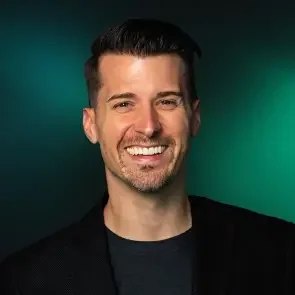
Hed Kovetz is the co-founder and chief executive of Silverfort, an Israeli identity security company that adds checks such as multi-factor authentication to systems that were never built to support them. He was born on Kibbutz Mefalsim near the Gaza border in southern Israel, served six years in the Israeli intelligence Unit 8200 and once planned to be a painter. He started Silverfort in 2016 with two friends from his army service, Yaron Kassner and Matan Fattal.
Growing Up on Kibbutz Mefalsim
He was born on the kibbutz and later moved with his family to the Galilee in northern Israel. His mother is an artist and his father a software engineer, and he told the newspaper Israel Hayom in 2024 that he leaned toward the artistic side and mostly thought about painting. Before his military service he volunteered for a year at a boarding school for at-risk youth.
Six Years in Unit 8200
He then spent six years in Unit 8200, where he commanded several teams and received the military intelligence chief's award for his work, according to Israel Hayom. He told Safety Detectives that after the army he worked as a cybersecurity product manager on national systems: Coming up with security solutions that work at a scale of a whole country gave me a good view of what cybersecurity looked like from both the offensive side and the defense side
.
A Detour Through Painting and a Tel Aviv Bar
Unlike many of his unit friends, he did not plan to stay in technology. He told Israel Hayom that painting was his great love and that he planned to study at the Bezalel Academy of Arts and Design in Jerusalem. After the army he wanted a break from pressure and ran a bar in Tel Aviv, Israel. He said the bar years were good, but they showed him that what he enjoyed most was teamwork and working with people, which painting offered less of. He missed the teamwork of Unit 8200 and wanted to build a workplace that would be good for him and others and leave room for technical creativity.
Founding Silverfort in 2016
He founded Silverfort with Kassner and Fattal, choosing identity because so many breaches used stolen passwords. He explained the weakness to Safety Detectives: If someone takes over your identity, steal your password, for example, they can impersonate you and access everything. No security tools would stop them because they are coming through the front door.
Security executives told the founders that existing tools each covered only part of a company, such as web applications or cloud services, leaving older systems, command-line tools and service accounts without protection.
The founders chose to build a new kind of product, which he now says was a harder path than he understood. On the Cyber GTM Talk podcast he recalled the thinking: Why would you want to be a me too? Why would you want to do something that five other companies are already doing?
It took years to get the technology working and longer to win customers and investors. We were under the radar, very responsible, growing very slowly, trying to really make sure we have product market fit. Now, you know what, looking back, it saved us.
He admitted the comparison with friends who sold companies quickly was hard: Early on, I was looking around and all these other CEOs that are friends of mine that are building something so quickly and selling their companies for hundreds of millions of dollars after two years or three years.
Silverfort raised a $116 million round in 2024, and Israel Hayom reported that the company had raised more than $220 million and employed more than 300 people in 15 countries, most of them in Israel. In the company's funding announcement he wrote: Compromised identities are now the weapon of choice for attackers, making identity the most vulnerable element of the enterprise attack surface.
Identity as the Last Line of Defense
He chose identity before the pandemic because he expected people to work from anywhere. On Cyber GTM Talk he said if people can really connect from anywhere using any device, then it's really their identity. That is your last line of defense.
He has also argued that founders should look for large, established categories that have gone without new ideas for years.
Leading Through October 7
Part of his family stayed near Gaza after his parents moved north. His grandmother was in her home on Kibbutz Mefalsim when Hamas fighters attacked on October 7, 2023, and she and the other residents survived thanks to the kibbutz's emergency squad and local soldiers, Israel Hayom reported. He told the paper that the company had to pick itself up and keep running, including raising money from investors, while many managers and employees were called up for reserve duty.
Sources
- Israel Hayom: From the kibbutz near Gaza to a startup that raised hundreds of millions (Hebrew, 2024)
- Safety Detectives: Interview with Hed Kovetz
- Cyber GTM Talk: 3 big decisions that shaped the Silverfort of today, with Hed Kovetz
- Silverfort: Silverfort raises $116M to unify identity protection (2024)
- Forbes Councils: Hed Kovetz profile
Sources retrieved October 21, 2026.