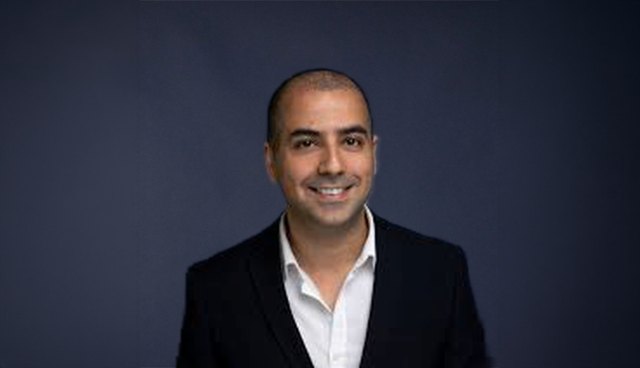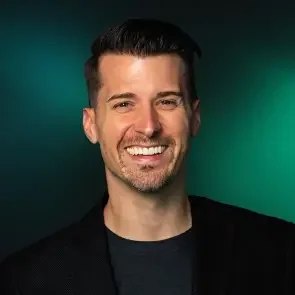
Evan Reiser is the co-founder and chief executive of Abnormal AI, the email security company he started in 2018 as Abnormal Security. He came to security from advertising technology, where he spent years building systems that predict what people will click, and he applied the same behavioral modeling to spotting emails that do not fit a person's normal patterns. He studied computer systems engineering at Rensselaer Polytechnic Institute in Troy, New York, and founded several startups before Abnormal.
A Second Chance at Rensselaer
In high school he was a gamer who stayed up all night on the early internet, building games and solving online puzzles. That habit followed him to college. He told Insight Partners: I failed second semester and got a job at a local ice cream store
. He wrote to the dean to ask for another chance, came back after the summer and finished his degree on the dean's list. That was when I developed my work ethic.
Abnormal's biography of him traces his career to research and development work in machine learning for intelligence applications at Eastman Kodak, and in 2006 he took his first software engineering job in Manhattan, New York City, where he arrived by 7 a.m. and was the last to leave.
Early Startups in Advertising
His first company, GamerNook, was a social network for gamers founded in 2007. I was getting fan mail from users saying it changed their lives, but I was dead broke, using my savings to pay server bills, eating off the Burger King dollar menu, and sleeping on a friend’s couch.
In 2008 he joined former Yahoo executives to start Bloomspot, a deals service for luxury experiences, which taught him unit economics. We made money and hired more than 100 people
, he said, But the cost of acquiring customers just kept going up and up.
JPMorgan Chase bought Bloomspot.
He then built AdStack, which used machine learning to personalize ads and marketing email. TellApart acquired it, and Twitter later acquired TellApart, where he led product management and machine learning teams for Twitter's advertising business. He jokes about that period. On the Eye on AI podcast in January 2026 he said I spent the grand majority of my career getting people to click on ads.
Of the ads that follow people around the internet, he added: That's almost certainly my fault at some level, so I apologize.
Founding Abnormal Security at Greylock
At Twitter he started thinking about uses for behavioral data outside advertising. Imagine that you could see every single keystroke of every employee in the world
, he told Insight Partners. You would develop a superhuman ability to answer business questions.
In 2018 he left with Sanjay Jeyakumar, a founding engineer at TellApart and software architect at Twitter. Of his co-founder he said: Sanjay is very perceptive and thoughtful. His cognitive skills are off the charts.
The two worked out of the venture firm Greylock's office on Bluxome Street in San Francisco, California, in an arrangement the firm calls incubation. We never really pitched Greylock, though we did eventually, but early on it was just like, 'Hey, let's go explore together'
, he told Business Insider in 2019. Greylock arranged meetings with dozens of large-company security and IT chiefs. In a LinkedIn essay on the company's founding he wrote that he had assumed ransomware and malware were the bigger problems: It wasn’t until I sat in front of over 50 CIO’s and CISO’s did I realize what an enormous issue it really is
. The executives kept describing financial losses from socially engineered email, such as fake invoices and impersonated executives. Abnormal's first product used the behavioral models he knew from ad targeting to learn how each employee normally communicates and to flag messages that break the pattern.
He has said the early plan was overconfident. It was audacious and maybe ridiculous, in hindsight
, he said. We had a path to IPO all worked out.
Greylock led a $24 million Series A in 2019, and Insight Partners led a $210 million round in 2022 that valued the company at $4 billion. The company later renamed itself Abnormal AI.
Studying Known Good Behavior
He describes himself as an outsider to the security industry. So I'm a bit of a cybersecurity outsider, but I've been an AI insider for a long time.
His central argument is that attacks written for one target do not match any list of known threats, so Abnormal models normal behavior instead. On Eye on AI he put it this way: rather than kind of studying known bad, we focus on known good.
In the LinkedIn essay he wrote BEC is not an email problem - it’s a social engineering problem.
He expects AI to make those attacks cheaper and more personal, with criminals using language models to research targets and write messages that reference real conversations. Greylock's 2024 profile recorded his early reception: Some people laughed at us. When we said we were going to use AI to analyze behavior more effectively than humans, no one believed that was possible
. He told the same writer As a civilization, we’ve given up on software being able to do this job, but I refute that idea
.
Sources
- Insight Partners: How Evan Reiser is better understanding and securing human behavior with Abnormal Security (2024)
- Business Insider: The inside story of how Greylock incubated security startup Abnormal (2019)
- Evan Reiser on LinkedIn: The Abnormal journey into email security
- Eye on AI #313: Evan Reiser on how Abnormal AI protects humans with behavioral AI (2026)
- Greylock: A radically different AI-native approach to cybersecurity (2024)
- Abnormal AI: Evan Reiser biography
Sources retrieved October 21, 2026.